

Mr. Bhupesh Bameta

Mr. Bhupesh Bameta

Portfolio Manager - Debt, Aditya Birla Sun Life Mutual Fund.

Mr. Bhupesh Bameta is a Fund Manager and Economist with Aditya Birla Sun Life AMC Limited. He brings with him an overall experience of 17 years in the financial services industry, and joined ABSLAMC’s Fixed Income Investment team in December 2017.Prior to joining ABSLAMC, he was the Head of Research in Forex and Rates Desk at Edelweiss Securities Limited, covering global and Indian forex markets and economies. He was also associated with Quant Capital for 6 years as an Economist and was covering Indian and global economy and markets.Bhupesh is an Engineering graduate from IIT-Kanpur and was All India Rank 1 in Graduate Aptitude Test in Engineering (GATE).

Please note we have published the answers as it is received from the Fund Manager of Aditya Birla Sun Life Mutual Fund.

Q1. The repo rate has been held at 5.25% for four consecutive meetings. What is your view on interest rates from here, and what are the key factors investors should watch over the coming months?

Ans: We expect one 25 bps rate hike in the current year, taking the repo to 5.50%. Key monitorable are progress of the US Iran war; outcome of the monsoon; and the US Fed rate hike decisions.

Q2. The rupee has weakened past ₹95 to the dollar this year. What is your view on the currency from here, and what are the key factors that will drive its direction?

Ans: While the rupee has staged a modest recovery following the successful rollout of the FCNR(B) scheme, we are unsure about the prospects of a meaningful appreciation in the near term. The backdrop remains challenging, with expectations of monetary tightening across developed markets strengthening the dollar's appeal, persistent uncertainty around the AI-led investment cycle influencing global capital allocation, and disruptions in crude oil supply chains keeping energy prices volatile. These factors are likely to constrain sustained currency gains. Hence, we expect the INR to remain broadly range-bound, hovering around ₹95/USD, until greater clarity emerges.

Q3. Several platforms are currently offering bonds with coupon rates ranging between 12–14%. What questions should an investor ask, or factors should they evaluate, before investing in such high-yield bonds?

Ans: As a thumb rule, the higher the coupon rate of a bond, the lower is its credit rating. And the lower the credit rating of a bond, higher will be its default risk and lower will be its liquidity. While the OBPPs are offering such high yielding bonds, they hardly have any secondary market liquidity or in other words they are buy and hold instruments. An investor who is willing to buy such bonds should reflect if he is okay to assume that level of risk for the whole term of the bond and how he will exit his investments should a default risk unfortunately arise.

Q4. Investors often focus on interest-rate risk when evaluating debt funds, but what is reinvestment risk? Why can falling interest rates actually create a challenge for an investor who is dependent on regular income from fixed-income investments?

Ans: Reinvestment risk is another form of interest rate risk where the portfolio manager has to reinvest proceeds from the sale or maturity of any bond held in the portfolio at a lower rate of interest than it is today. Since the future trajectory of interest rates is currently unknown, reinvestment risk might have the effect of lowering your overall returns.

Change in interest rates in the economy largely influences the overall returns from debt funds because the underlying bond prices and interest rates move inversely to each other i.e., when interest rates rise, bond prices fall and vice versa.

Q5. Overnight funds invest in securities with a maturity of one day, making them structurally different from most other debt-fund categories. For an investor with a short-term cash requirement, what should they understand about the return potential, risks and appropriate use of an overnight fund compared with a liquid fund?

Ans: Overnight Funds offer modest returns with near zero risk that largely reflect tri-party repo rates minus the minimal fund expenses. These funds are meant for institutional investors to generate superior returns compared to current accounts and term deposits from their daily surplus cash that would have otherwise remained idle.

Instead, retail investors with similar requirement should park their money in liquid or ultra short term funds. These funds are actively managed by a seasoned portfolio manager and typically invest in higher quality debt and money market instruments with lower duration. In most of the circumstances, these funds generate superior returns to comparable term deposits. Due to their open-ended structure, these funds also offer continuous liquidity enabling investors to park or redeem their money frequently subject to exit loads, if any. However, it should be borne in mind that the underlying bonds in these funds are ultimately market linked instruments that are exposed to price risks howsoever minimal they might be.

Q6. With the majority of Indian household savings still parked in bank deposits, what would be your primary argument for why an investor should consider debt mutual funds over a bank FD- and in what circumstances might an FD still make more sense?

Ans: If I were to assume that both FDs and debt MFs generate equivalent returns and since they also share the same tax structure, I would still vote for debt MFs due to the diversity of products available in the space unlike a plain vanilla FD, the benefit of an active management from a professional money manager and continuous liquidity that enables the investor to buy and sell as per his financial needs.

Source: Internal Research

Mutual Fund investments are subject to market risks, read all scheme related documents carefully.

Mr. Dhaval Gala

Mr. Dhaval Gala

Portfolio Manager - Equity, Aditya Birla Sun Life Mutual Fund.

Mr. Dhaval Gala is a Fund Manager and Senior Analyst with Aditya Birla Sun Life AMC Limited (ABSLAMC). He has an overall experience of 19 years in equity and capital market space. He joined ABSLAMC in February 2011 as a part of the Equity Fund Management and Analyst team. He specializes in Banking and Financial Services sector.Prior to joining ABSLAMC, Dhaval has worked with B&K Securities Limited and J P Morgan Chase India Private Limited.Dhaval is an MBA in Finance from N L Dalmia Institute of Management and Research, Mumbai

Please note we have published the answers as it is received from the Fund Manager of Aditya Birla Sun Life Mutual Fund.

Q1. With Nifty valuations now closer to their long-term average after two years of time correction, what is your near-term outlook- do you see the market entering an earnings-led re-rating phase, or is more consolidation likely before the next leg up?

Ans: The valuation correction over the past two years has materially improved the attractiveness of Indian large-cap equities.

The Nifty 50 currently trades at approximately 18.9 times 12-month forward earnings, representing a discount of around 10% to its historical average. This provides a more favourable risk-reward profile, particularly given improving earnings visibility and resilient domestic fundamentals.

In contrast, the mid-cap and small-cap indices trade at approximately 27.5 times and 22.9 times forward earnings, representing premiums of 15% and 31% to their respective long-term averages. Although valuations have corrected from the September 2024 highs, returns in these segments are likely to depend increasingly on earnings execution rather than further multiple expansion.

Q2. July's AMFI data showed small-cap funds attracting ₹7,767 crore and mid-cap funds ₹6,192 crore, while large-cap funds saw an outflow of ₹1,322 crore. What does this flow asymmetry tell you about how investors are perceiving risk today, and what should an MFD say to a client whose portfolio has increasingly shifted towards mid- and small-caps?

Ans: The flow asymmetry reflects investors’ preference for growth and recent performance, but it should not be mistaken for a lower perception of risk. Mid- and small-caps can offer attractive long-term opportunities, but they also carry higher volatility and valuation risk.

For an MFD, the message should be simple: don’t chase flows; assess the portfolio’s overall risk and asset allocation. If mid- and small-cap exposure has risen significantly, it may be an appropriate time to rebalance rather than take incremental risk, while staying invested for the long term.

Q3. Management quality is often cited as an important part of fundamental investing, but it can be difficult to assess objectively. What are the key checks and signals in your investment process that help you differentiate between management teams that genuinely create long-term value and those that merely have a good track record or a compelling narrative?

Ans: The investment research team comprises experienced sector analysts who work closely within a collaborative research framework. Coverage responsibilities are organized by sectors, enabling analysts to develop deep domain expertise while ensuring comprehensive monitoring of investment opportunities across the market. Research universe consists of ~600 listed companies, covering the large-cap, mid-cap, and select small-cap segments. The universe is further bifurcated to have Tier I and Tier II companies to facilitate deep research/light monitoring.

Q4. Is stock selection in the portfolio primarily driven by the fund manager's individual discretion, or is it guided by the AMC's overarching investment philosophy and process? How much latitude do fund managers typically have to deviate from house principles?

Ans: Investment decision-making process combines both top-down and bottom-up approaches, supported by a collaborative investment framework.

From a top-down perspective, the AMC begins by assessing the broader macroeconomic environment, including economic growth, inflation, interest rates, policy developments, and global trends. This helps us identify sectors and themes that are likely to benefit from the prevailing economic cycle.

The bottom-up approach complements this by focusing on in-depth fundamental research on individual companies. The investment team evaluates factors such as business quality, management capability, competitive positioning, financial strength, growth prospects, and valuation to identify companies with sustainable long-term potential.

The process is highly collaborative, with regular discussions among fund managers, research analysts, and the investment committee. Differing views are encouraged, as they help challenge assumptions, test investment hypotheses, and strengthen conviction. Investment recommendations are rigorously debated using research, data, and risk considerations before arriving at a decision. Inclusion of a stock in Investment Universe is subject to approval of the Chief Investment Officer & Investment Committee. While investment decisions are informed by collective research and deliberations, the fund manager retains the final investment authority and is accountable for portfolio construction and execution. This structure ensures that decisions benefit from diverse perspectives while maintaining clear ownership and accountability for portfolio outcomes.

Q5. Buying a stock is often easier than deciding when to sell it. What are the key triggers that make you exit a stock, and how do you maintain the discipline to accept that you may have made the wrong call and cut the position rather than becoming emotionally attached to the original investment thesis?

Ans: The sell discipline is primarily based on the investment team’s judgement rather than a fixed or mechanical process.

Systematic factors include monitoring regulatory limits, portfolio exposures and position sizes.

Subjective factors include changes in the investment thesis, company fundamentals, valuation, management quality and the overall risk-reward profile.

There are no fixed or predetermined sell triggers. The decision to trim or exit a position is made based on the prevailing circumstances and overall portfolio considerations

Q6. With multiple AMCs now entering the SIF space, how do you see the industry evolving over the next 3–5 years? And from an investor’s perspective, who should consider a SIF, and what role should it ideally play in their overall portfolio?

Ans: The launch of the SIF framework is arguably one of the most significant developments in the Indian asset management industry in recent years. By creating a regulated category between traditional Mutual Funds and more exclusive structures such as PMS and AIFs, SEBI has opened the door for sophisticated investment strategies to a much wider set of investors. SIFs combine the transparency, governance, liquidity and disclosure standards of mutual funds with greater portfolio flexibility, including long-short, dynamic asset allocation and advanced risk management strategies.

Over the next 3–5 years, we believe the industry will evolve along three broad dimensions:

1. Greater Investor Adoption and Product Innovation As investor awareness increases, SIFs are likely to emerge as a meaningful allocation for affluent and HNI investors seeking solutions beyond traditional long-only funds. We are already witnessing strong industry participation, with several leading AMCs launching strategies across equity, hybrid and long-short categories, and the number is expected to grow further as track records get established.

2. Shift Towards Outcome-Oriented Investing Investors today are increasingly focused on risk-adjusted returns rather than absolute returns alone. Strategies that seek to participate in upside while managing downside risk, reducing drawdowns and navigating different market environments are likely to gain prominence. Long-short and dynamic allocation strategies within the SIF framework are well positioned to address this evolving investor need.

3. Emergence of SIFs as a Distinct Portfolio Bucket Just as hybrid funds and international funds have evolved into dedicated allocation categories, we expect SIFs to become a separate allocation bucket within investor portfolios. Over time, investors and advisors may view SIFs as tools for diversification, risk management and alpha generation rather than simply another equity product.

Who Should Consider a SIF?

SIFs are best suited for investors who:

Have a sizeable investment corpus and meet the minimum investment requirement of ₹10 lakh.

Understand market cycles and are comfortable with relatively sophisticated investment strategies.

Are looking beyond traditional long-only equity investing.

Seek better risk-adjusted returns and portfolio diversification.

Have a medium to long-term investment horizon.

What Role Should SIFs Play in a Portfolio?

In our view, SIFs should typically complement, rather than replace, a core mutual fund portfolio.

A traditional portfolio can continue to be built around diversified equity, debt and hybrid funds, while SIFs can serve as a satellite allocation aimed at:

Enhancing portfolio alpha.

Managing volatility and drawdowns.

Accessing differentiated strategies unavailable in conventional mutual funds.

Generating returns across varying market environments.

Source: Internal Research

Mutual fund investments are subject to market risks, read all scheme-related documents carefully.

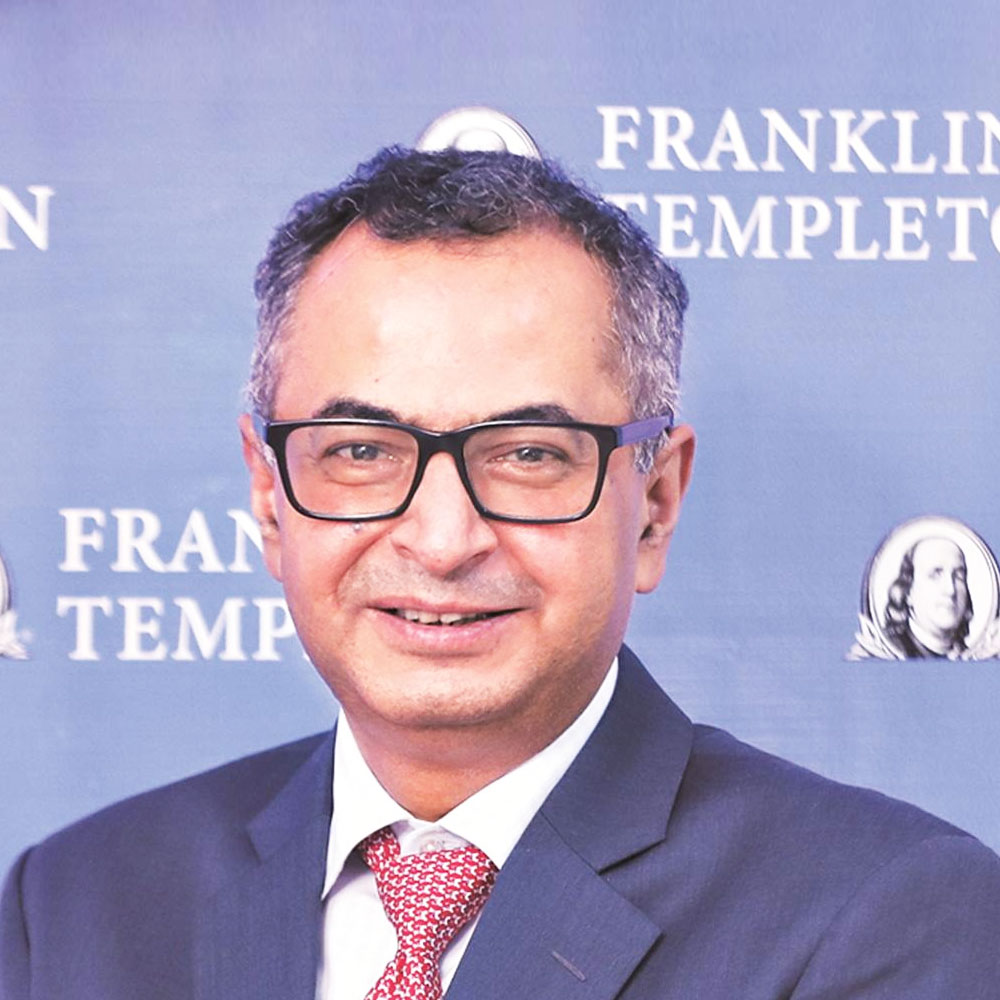
Mr. Rahul Goswami

Mr. Rahul Goswami

Chief Investment Officer - Fixed Income, Franklin Templeton Mutual Fund.

Rahul Goswami is chief investment officer (CIO) and managing director at Franklin Templeton, Fixed Income in India. In this role, Rahul oversees the fixed income functions of the locally managed and distributed debt schemes of Franklin Templeton Mutual Fund. Rahul was previously the CIO of fixed income at ICICI Prudential Asset Management (I-Pru) and a key contributor to the success of I-Pru's fixed income funds in India. Prior to I-Pru, he was a member of the Franklin Templeton India Fixed Income team, serving as portfolio manager from 2002 to 2004. Rahul also brings a wealth of experience from his time at well-regarded banks such as Standard Chartered Bank and UTI Bank. He has over 24 years' experience in managing fixed income funds. Rahul earned his M.B.A. and his bachelor's degree in science from Bhopal University.

Please note we have published the answers as it is received from the Fund Manager of Franklin Templeton Mutual Fund.

Q1. With the RBI holding the repo rate steady with a neutral stance while raising its inflation forecast amid global oil and supply-side risks, what are your expectations for the rate trajectory going forward?

Ans: As we look at the global interest rate environment, particularly in the United States, financial markets are currently pricing in the possibility of two additional rate hikes by the U.S. Federal Reserve over the next three quarters. This view is supported by the fact that U.S. economic growth continues to remain resilient, inflation has not cooled as much as anticipated, and unemployment remains relatively low at around 4.3%.

Given this backdrop, we do not believe the global interest rate environment can be described as particularly benign. The Reserve Bank of India (RBI) will remain mindful of external developments and global monetary policy trends. However, in our view, domestic economic factors will continue to play a much larger role in determining the direction of Indian interest rates.

Q2. Interest rates influence almost every asset class, from bonds to equities. How should investors understand the transmission of interest rate changes across different asset classes, and what are the key channels through which they affect investment returns?

Ans: Interest rates have a broad-based impact on the economy and different sectors could have varying degrees of sensitivity to changes in interest rates. Sectors like banks and NBFCs could see their net interest margin rising or declining with increase or decrease in interest rates respectively. Higher interest rates could discourage borrowing and reduce demand for real estate and consumer discretionary sectors. Higher interest rates raise borrowing costs for companies and could lead to postponement of capital expenditures.

On the fixed income side, bond yields are influenced by interest rate expectation. Bond yields and prices have an inverse relationship. Rising interest rates negatively impacts bond prices across tenures. Bonds with longer maturity profile are relatively more sensitive to changes in interest rates than bonds with shorter tenures. In a rising interest rate scenario, investors would prefer positioning at the lower end of the yield curve to reduce the negative impact of rising bond yields.

Q3. Investors often associate debt funds with safety, but different categories carry very different risks. How should investors understand the trade-off between credit risk and interest rate risk while selecting a debt fund?

Ans: Investors in fixed income markets are exposed to liquidity risk, credit risk and interest rate risk. The regulator has defined the broad categorization of fixed income mutual funds based on their maturity and credit risk profiles. For a conservative investor seeking to build an emergency corpus, a liquid fund would be more suitable than a long-distance fund as a liquid fund invests in money market instruments with very short maturities and carries relatively less interest rate risk. On the other hand, an investor seeking to benefit from decline in interest rates could take exposure to long-distance funds as they are more sensitive to interest rate changes. Investors seeking higher accrual gains often seek funds with higher yield to maturity. However, higher yields could often be associated with higher credit risk due to exposure to bonds with relatively lower credit ratings. This increases the credit risk of the fund and investors should be aware when taking exposures on the basis of higher yields.

Q4. Higher portfolio yields can appear attractive, but they often come with additional risks. Why should investors avoid selecting debt funds based solely on yield, and what other factors deserve equal attention?

Ans: Higher yields are often associated with higher credit risk. Investors should evaluate the portfolio quality and avoid funds with a predominantly lower credit profile if such funds are not in line with their risk appetite. Further, it would be prudent for investors to align their investments with their investment horizon and risk profile. Investors should take the help of mutual fund distributors and financial professionals who can help them select suitable funds to meet their financial needs.

Q5. In a credit market where external ratings may lag real developments, what does your in-house credit evaluation framework look like — and how do you assess a company's true debt-servicing ability?

Ans: At Franklin Templeton, we adopt a robust investment framework for credit evaluation and portfolio construction. We go beyond ratings through in-house research by leveraging our strengths on the equity research side. Our investment process begins with our macro-economic view with an in-depth analysis of macro factors, quantitative analysis and forecast of future macro trends. Further, we undertake an in-depth credit analysis, asset-liability match and yield curve analysis for issuers to be included in our portfolio. We regularly monitor and evaluate the credit profile of issuers in our portfolios and seek to maintain high quality portfolios comprising sovereign securities and high rated corporate debt instruments.

Q6. What are the most important parameters investors should evaluate before selecting an Arbitrage Fund or a Liquid Fund? Beyond recent returns, what factors deserve close attention, and what are the common mistakes investors should avoid while evaluating these schemes?

Ans: Arbitrage funds are equity-oriented hybrid mutual funds that seek to generate returns by simultaneously taking offsetting positions in the cash and derivatives markets. They aim to capture arbitrage opportunities arising from temporary price differences between the two markets, while minimizing directional equity market risk through hedged positions. These funds are suitable for investors seeking a temporary parking avenue for money to be invested or deployed elsewhere. Since these are equity-oriented funds, the taxation applicable to capital gains from these funds is similar to equity funds. Investors should evaluate the performance of these funds over different market cycles to assess their volatility and select funds which align to their risk appetite. The investment horizon for investing in arbitrage funds could be from few months up to a year.

Liquid funds invest in money market instruments with maturity up to 91 days. This makes them suitable for very conservative investors with an investment horizon of few days to a month. This can be a suitable option for investors seeking to create an emergency corpus which can be accessible anytime with relatively less volatility. Investors can seek the services of mutual fund distributors and financial professionals for selecting funds suitable for their needs.

Note: The responses and views presented in this document have been provided by the investment team of Franklin Templeton Asset Management (India) Pvt. Ltd.

Mutual Fund investments are subject to market risks, read all scheme related documents carefully.

Contact Us

Dr. Ashok Chandran Financial Services
Office Address:
B -107, Building No.1,
Kukreja Complex, LBS Road,
Bhandup, Mumbai – 400078

Contact Details:
Email : ashok@ac.co.in
Mobile: +91 98211 57708

e-wealth-reg
e-wealth-reg
CALLBACK